
By Mohit Bhatt
AI is booming. What impact will it have on your business?
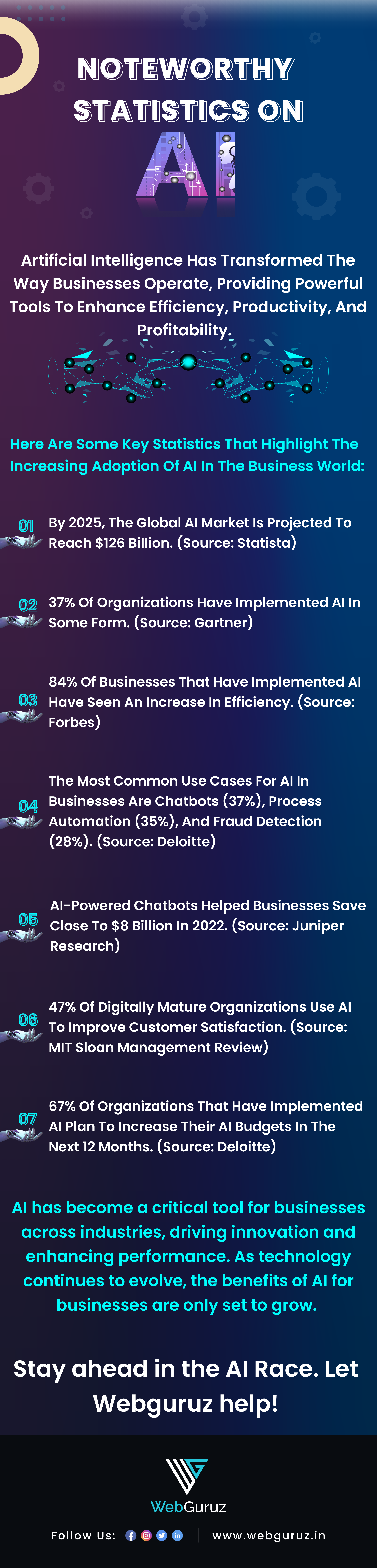
Technology is evolving and AI is the new buzzword. According to a study conducted in 2022, about 57% of companies in India had already incorporated AI into their business operations, and 27% of others were exploring the possibility of the same. While giant corporations showed greater interest in AI adoption, smaller organizations are expected to catch up soon.
AI can be accounted for by the drastic changes in the tech sector, wherein it has contributed significantly to improved productivity and efficiency through process simplification and automation. It won’t be an exaggeration to say that AI will form the fundamental basis of Industry 4.0. In fact, it is estimated that AI will potentially maximize productivity by over 30% in the next 15 years to come. And, businesses that leverage AI will reap the benefits.
AI(Artificial Intelligence) is an umbrella term that encompasses a broad range of technologies such as Machine Learning(ML), Natural Language Processing(NLP), Natural Language Generation(NLG), Deep Learning(DL), and Robotics. These technologies have the potential to revolutionize different businesses across various industries.
Retail Industry
The retail industry has been an early adopter of AI, with major retailers such as Amazon, Walmart, and Target utilizing AI to enhance their operations. AI-powered chatbots and virtual assistants provide customers with personalized shopping experiences, and AI algorithms analyze customer data to identify buying patterns and preferences.
Retailers can use this data to make informed decisions about inventory, pricing, and promotions. AI-powered cameras can detect shoplifting and theft, reducing losses for retailers. Additionally, AI is used to optimize supply chain management, improving the accuracy of inventory forecasting and streamlining logistics.
The retail industry has been an early adopter of AI, with major retailers such as Amazon, Walmart, and Target utilizing AI to enhance their operations. AI-powered chatbots and virtual assistants provide customers with personalized shopping experiences, and AI algorithms analyze customer data to identify buying patterns and preferences.
Retailers can use this data to make informed decisions about inventory, pricing, and promotions. AI-powered cameras can detect shoplifting and theft, reducing losses for retailers. Additionally, AI is used to optimize supply chain management, improving the accuracy of inventory forecasting and streamlining logistics.
Manufacturing Industry
The manufacturing industry has been revolutionized by AI, particularly in the area of robotics. AI-powered robots can perform repetitive and dangerous tasks with greater efficiency and accuracy than humans. These robots are also capable of learning from their experiences, making them more efficient over time.
Predictive maintenance powered by AI can help manufacturers optimize their production processes, reducing downtime and increasing productivity. Manufacturers can also use AI to analyze data from sensors and equipment to identify opportunities for cost savings and process improvements.
The manufacturing industry has been revolutionized by AI, particularly in the area of robotics. AI-powered robots can perform repetitive and dangerous tasks with greater efficiency and accuracy than humans. These robots are also capable of learning from their experiences, making them more efficient over time.
Predictive maintenance powered by AI can help manufacturers optimize their production processes, reducing downtime and increasing productivity. Manufacturers can also use AI to analyze data from sensors and equipment to identify opportunities for cost savings and process improvements.
Finance Industry
The finance industry has been transformed by AI, particularly in the areas of fraud detection and risk management. AI algorithms can detect fraudulent transactions in real time, reducing losses for financial institutions.
AI can also analyze vast amounts of data to identify patterns and anomalies, helping financial institutions make informed decisions about investments and lending.
Additionally, AI-powered chatbots can provide personalized financial advice to customers, improving customer engagement and satisfaction.
The finance industry has been transformed by AI, particularly in the areas of fraud detection and risk management. AI algorithms can detect fraudulent transactions in real time, reducing losses for financial institutions.
AI can also analyze vast amounts of data to identify patterns and anomalies, helping financial institutions make informed decisions about investments and lending.
Additionally, AI-powered chatbots can provide personalized financial advice to customers, improving customer engagement and satisfaction.
Healthcare Industry
The healthcare industry has also been revolutionized by AI, particularly in the areas of diagnostics and personalized medicine. AI algorithms can analyze vast amounts of patient data to identify patterns and anomalies, helping physicians make more accurate diagnoses and develop personalized treatment plans.
AI-powered robots can also perform surgical procedures with greater precision than humans, reducing the risk of complications and improving patient outcomes.
Additionally, AI-powered chatbots can provide patients with personalized health advice, improving patient engagement and adherence to treatment plans.
The healthcare industry has also been revolutionized by AI, particularly in the areas of diagnostics and personalized medicine. AI algorithms can analyze vast amounts of patient data to identify patterns and anomalies, helping physicians make more accurate diagnoses and develop personalized treatment plans.
AI-powered robots can also perform surgical procedures with greater precision than humans, reducing the risk of complications and improving patient outcomes.
Additionally, AI-powered chatbots can provide patients with personalized health advice, improving patient engagement and adherence to treatment plans.
Impact of AI on Digital Marketing
The marketing industry has been transformed by AI, particularly in customer segmentation and personalized marketing. With tech giants investing heavily, smaller businesses are adopting AI solutions too. The global AI in marketing market is projected to grow from $27.4B in 2023 to $107.4B by 2028.
AI algorithms excel at analyzing customer data to uncover patterns and preferences, enabling hyper-targeted campaigns and optimized PPC performance. AI chatbots and virtual assistants deliver personalized shopping experiences that boost engagement and satisfaction.
The marketing industry has been transformed by AI, particularly in customer segmentation and personalized marketing. With tech giants investing heavily, smaller businesses are adopting AI solutions too. The global AI in marketing market is projected to grow from $27.4B in 2023 to $107.4B by 2028.
AI algorithms excel at analyzing customer data to uncover patterns and preferences, enabling hyper-targeted campaigns and optimized PPC performance. AI chatbots and virtual assistants deliver personalized shopping experiences that boost engagement and satisfaction.
Benefits of AI in Businesses
A number of studies suggest growth in the market revenue for AI by 2030, with percentage growth differing across reports. While market research firm IDC projects the AI market reaching half a trillion dollars, Precedence Research suggests it will grow to over $1.5 trillion by 2030. The benefits of AI are numerous, and businesses that have embraced it are experiencing significant advantages.
Improved Efficiency
AI-powered machines and robots can perform tasks with greater speed and accuracy than humans, improving efficiency and productivity.
Cost Savings
AI-powered machines and robots can perform tasks at a lower cost than humans, reducing labor costs and increasing profitability.
Improved Customer Experience
AI-powered chatbots and virtual assistants can provide customers with personalized experiences, improving customer engagement and satisfaction.
Improved Decision-Making
AI algorithms can analyze vast amounts of data to identify patterns and anomalies, helping businesses make informed decisions about inventory, pricing, and promotions.
Competitive Advantage
Businesses that have embraced AI are gaining a competitive advantage over competitors who haven’t adopted it yet. Such businesses are increasingly preferred by clients as they can provide better efficiency in less time.
A number of studies suggest growth in the market revenue for AI by 2030, with percentage growth differing across reports. While market research firm IDC projects the AI market reaching half a trillion dollars, Precedence Research suggests it will grow to over $1.5 trillion by 2030. The benefits of AI are numerous, and businesses that have embraced it are experiencing significant advantages.
Improved Efficiency
AI-powered machines and robots can perform tasks with greater speed and accuracy than humans, improving efficiency and productivity.
Cost Savings
AI-powered machines and robots can perform tasks at a lower cost than humans, reducing labor costs and increasing profitability.
Improved Customer Experience
AI-powered chatbots and virtual assistants can provide customers with personalized experiences, improving customer engagement and satisfaction.
Improved Decision-Making
AI algorithms can analyze vast amounts of data to identify patterns and anomalies, helping businesses make informed decisions about inventory, pricing, and promotions.
Competitive Advantage
Businesses that have embraced AI are gaining a competitive advantage over competitors who haven’t adopted it yet. Such businesses are increasingly preferred by clients as they can provide better efficiency in less time.
Wrapping up
In conclusion, AI is revolutionizing businesses across industries. Organizations embracing AI are experiencing significant benefits, while those slow to adopt risk falling behind competitively.
As AI technology evolves, adoption will likely accelerate. However, while AI offers transformative potential, businesses must carefully consider both its benefits and risks.
Potential challenges include workforce displacement from automation and the risk of biased algorithms creating unfair outcomes. These issues require proactive management.
Responsible AI implementation requires: ethical system design, transparent algorithms, workforce training programs, and continuous bias monitoring. Companies must invest in reskilling initiatives to help employees transition alongside AI adoption.
When implemented thoughtfully, AI can drive innovation while maintaining ethical standards. With proper governance, businesses can harness AI’s potential to maintain competitiveness in evolving markets. Explore more insights on our blog page.
In conclusion, AI is revolutionizing businesses across industries. Organizations embracing AI are experiencing significant benefits, while those slow to adopt risk falling behind competitively.
As AI technology evolves, adoption will likely accelerate. However, while AI offers transformative potential, businesses must carefully consider both its benefits and risks.
Potential challenges include workforce displacement from automation and the risk of biased algorithms creating unfair outcomes. These issues require proactive management.
Responsible AI implementation requires: ethical system design, transparent algorithms, workforce training programs, and continuous bias monitoring. Companies must invest in reskilling initiatives to help employees transition alongside AI adoption.
When implemented thoughtfully, AI can drive innovation while maintaining ethical standards. With proper governance, businesses can harness AI’s potential to maintain competitiveness in evolving markets. Explore more insights on our blog page.




Get in Touch!
Error: Contact form not found.
Related Posts
Stay updated and join the buzz with these topics